Understanding the Differences Between MIG and TIG Welding for Optimal Results
Introduction to Welding Techniques
Overview of Welding and Fabrication
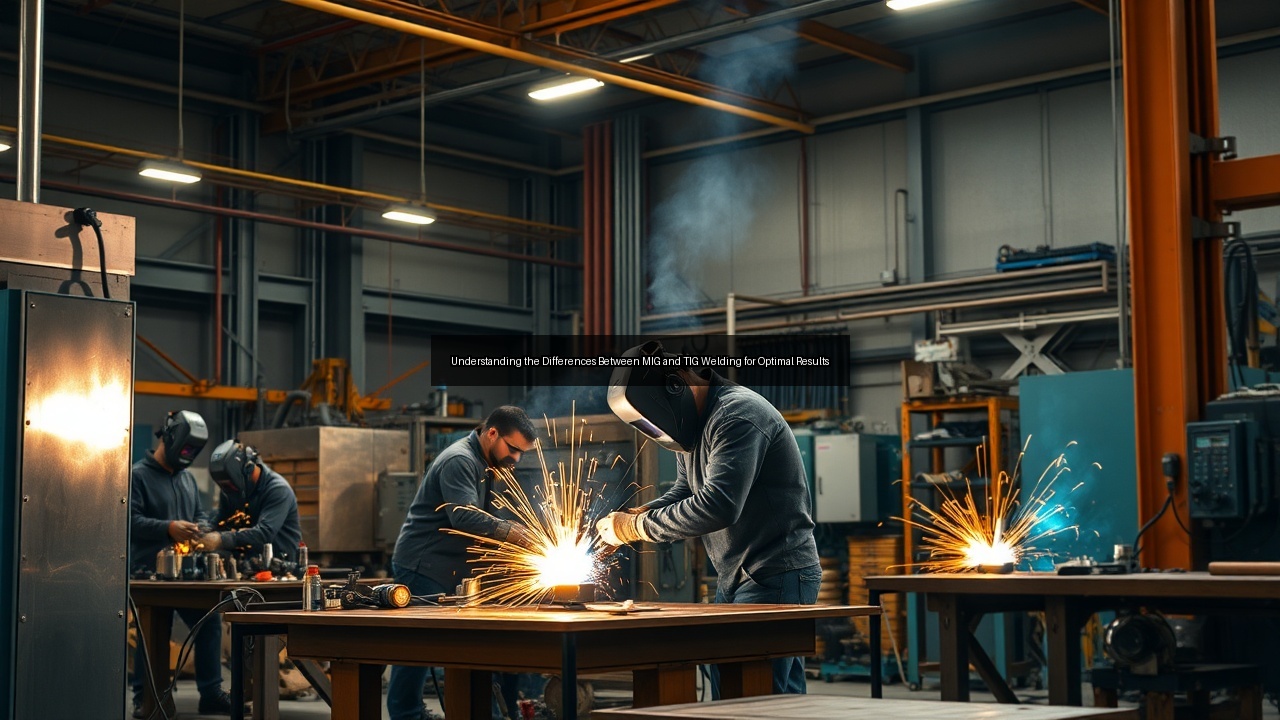
Welding and fabrication form the backbone of modern metal fabrication processes across industries. Fabricators combine cutting, shaping, and joining operations to create durable structures from raw metals. The process often starts with design drawings that guide saw cuts and machining steps before welders apply heat to fuse components. Techniques such as mig welding, tig welding, and smaw integrate with brazing for specialized joints. Custom welding and fabrication services address client needs in infrastructure projects, while fabrication companies rely on skilled welders to maintain structural integrity. Proper tool selection and machinery setup reduce errors during the metal fabrication process and improve overall workflow efficiency.
Importance of Choosing the Right Welding Method
Selecting the correct welding method determines the strength, appearance, and cost of the final product in metal fabrication. Mig welding suits high-volume manufacturing runs because it delivers fast deposition rates with continuous wire feed. Tig welding provides superior control for thin sections and intricate designs where precision matters most. Fabrication and welding services evaluate material thickness, joint type, and production volume before recommending gmaw or gtaw. Poor method choice leads to rework, increased energy consumption, and higher scrap rates. Experienced fabricators match the process to the application to optimize both quality and delivery timelines in competitive markets.
MIG Welding: Characteristics and Applications
Understanding MIG Welding (GMAW)
Mig welding, also known as gmaw, uses a continuous wire electrode fed through a welding gun along with shielding gas to protect the molten pool. The process operates in semiautomatic or automated modes, allowing welders to maintain steady travel speeds across flat or horizontal joints. Fabricators appreciate the straightforward setup that requires fewer manual adjustments compared with other arc processes. Machines accommodate various wire diameters and gas mixtures to handle different metals effectively. In metal fabrication shops, mig equipment integrates easily into production lines, supporting consistent bead profiles on carbon steel, stainless, and aluminum when parameters receive proper calibration.
Advantages of MIG Welding in Metal Fabrication
Mig welding boosts productivity in fabrication and welding services because operators spend less time changing electrodes and more time laying continuous beads. The process tolerates minor surface contaminants better than tig welding, reducing pre-weld cleaning requirements. Welders achieve good penetration on thicker sections without excessive heat input that could distort parts. Automation options further enhance repeatability, lowering labor costs on repetitive tasks. Fabrication companies report improved workflow when mig machines pair with positioners and robotic arms, enabling higher output while maintaining acceptable mechanical properties in finished assemblies.
Common Applications of MIG Welding in Manufacturing
Manufacturing plants deploy mig welding for structural frames, machinery enclosures, and heavy equipment components where speed outweighs the need for cosmetic perfection. Automotive assembly lines rely on gmaw for chassis and body panels because the process accommodates high-volume production schedules. Fabrication companies also use mig for trailer frames, agricultural implements, and infrastructure elements such as railings and supports. The technique handles both thin sheet and plate materials effectively when operators adjust voltage and wire speed correctly, making it a versatile choice for general metal fabrication projects.
TIG Welding: Characteristics and Applications
Understanding TIG Welding (GTAW)
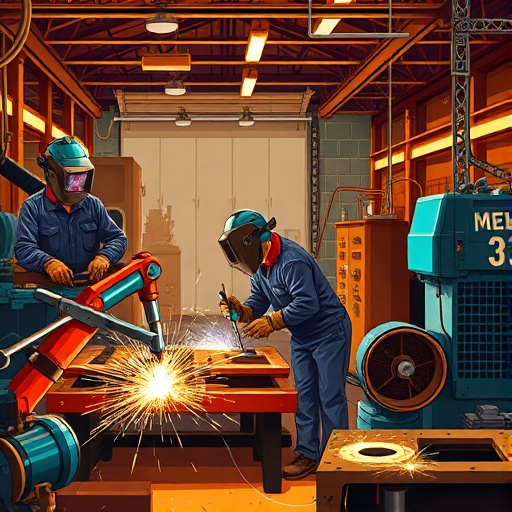
Tig welding, or gtaw, employs a non-consumable tungsten electrode and separate filler rod to create precise, high-quality welds. Shielding gas, usually argon, protects the arc and molten metal from atmospheric contamination. Welders control heat input through a foot pedal or fingertip adjustment, allowing fine modulation during the fabrication process. The method excels on reactive metals and thin materials that demand minimal distortion. Fabrication shops maintain dedicated tig stations equipped with advanced machines that support pulsed modes for improved control on alloys requiring exacting standards.
Advantages of TIG Welding for Precision Tasks
Tig welding delivers clean, spatter-free results that often require little post-weld finishing, saving time in quality control stages. The process produces superior fusion on aluminum and exotic alloys where other methods risk cracking or porosity. Welders achieve narrow, consistent beads that enhance both strength and appearance in visible applications. Reduced heat-affected zones help preserve mechanical properties in critical components. Fabrication and welding services value tig for projects that demand traceability and inspection documentation because the controlled parameters produce reliable, inspectable joints.
Common Applications of TIG Welding in Aerospace and Engineering
Aerospace manufacturers specify tig welding for engine components, fuel lines, and airframe assemblies where weight savings and fatigue resistance are essential. Engineering firms apply gtaw to pressure vessels, heat exchangers, and precision instrumentation housings. Fabrication companies serving these sectors maintain certified welders who follow strict procedures to meet aerospace and nuclear standards. The process also supports repair work on high-value parts, extending service life without compromising original design specifications. Consistent tig technique ensures joints withstand extreme temperatures and cyclic loading common in demanding environments.
Comparative Analysis: MIG vs. TIG Welding
Key Differences in Techniques and Processes
Mig welding operates with continuous wire feed and faster travel speeds, while tig welding requires manual filler addition and slower, more deliberate motion. Mig equipment features simpler controls suited for production environments, whereas tig machines offer advanced waveform options for specialized joints. Welders switch between processes based on joint accessibility and required finish quality. Fabrication workflows often combine both methods, using mig for structural elements and tig for visible or high-stress areas. Understanding these distinctions helps fabrication companies assign the right welder and machine to each task for optimal results.
Material Compatibility: Aluminum and Alloys
Aluminum responds differently to each process because of its high thermal conductivity and oxide layer. Mig welding with spool guns or push-pull systems handles thicker aluminum efficiently in manufacturing settings. Tig welding provides better oxide cleaning action and precise heat control on thin aluminum sheets and critical alloy components. Fabrication companies evaluate alloy type, thickness, and joint design before selecting mig or tig to avoid defects such as lack of fusion or cracking. Proper gas selection and surface preparation remain essential regardless of the chosen method.
Cost Considerations and Workflow Efficiency
Mig welding generally lowers per-part cost in high-volume runs because of higher deposition rates and reduced operator skill requirements. Tig welding increases expense on precision work due to slower speeds and greater welder expertise needed. Fabrication and welding services balance these factors by analyzing total workflow, including preparation, welding, inspection, and finishing operations. Automation of mig processes further reduces labor while tig often stays manual for complex geometries. Companies track material utilization, energy consumption, and rework rates to determine the most economical approach for each project.
Future Trends in Welding and Fabrication Technologies
The Role of Automation in Welding
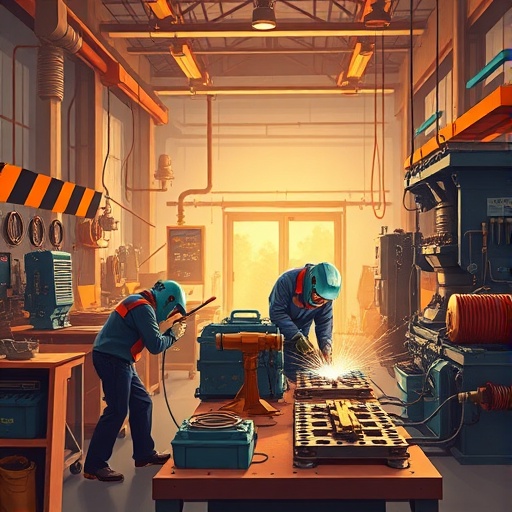
Automation transforms welding and fabrication by integrating robotic arms, positioners, and sensor feedback into production cells. Automated mig systems maintain consistent parameters across long shifts, improving throughput in manufacturing facilities. Advanced programming allows quick changeovers between part families without extensive downtime. Fabrication companies invest in these technologies to address labor shortages and meet rising demand for custom welding and fabrication services. The trend toward smarter machines continues as sensors enable real-time adjustments that reduce defects and support higher overall equipment effectiveness.
Sustainability in Welding Practices
Sustainability initiatives focus on reducing energy use, minimizing waste, and selecting low-emission processes in metal fabrication. Efficient mig and tig machines consume less power while advanced gas mixtures lower shielding gas volumes. Fabrication companies recycle scrap metal and optimize nesting software to cut material waste. Water-based coolants and fume extraction systems protect both workers and the environment. These practices align with broader industry goals of lowering the carbon footprint associated with welding and fabrication activities across infrastructure and manufacturing sectors.
Quality Control and ISO 9001 Standards in Fabrication
ISO 9001 certification drives systematic quality control throughout the fabrication process, from incoming material inspection to final weld verification. Fabrication companies document procedures for mig welding and tig welding to ensure repeatability and traceability. Non-destructive testing methods such as ultrasonic and radiographic inspection validate joint integrity on critical components. Continuous improvement programs analyze defect data to refine parameters and training. Adherence to these standards builds customer confidence in metal fabrication services and supports long-term contracts in aerospace, energy, and heavy equipment markets.
See Also
- Exploring the Future of Welding Technologies and Their Impact on Industry
- Essential Tools for Every Metal Fabrication Workshop
- Advancements in Aerospace Welding and Fabrication Technologies
- Sustainable Practices in Metal Fabrication for a Greener Future
- The Art of Custom Welding and Fabrication for Unique Applications