Achieving Tight Tolerances with Advanced Swiss Turning Techniques
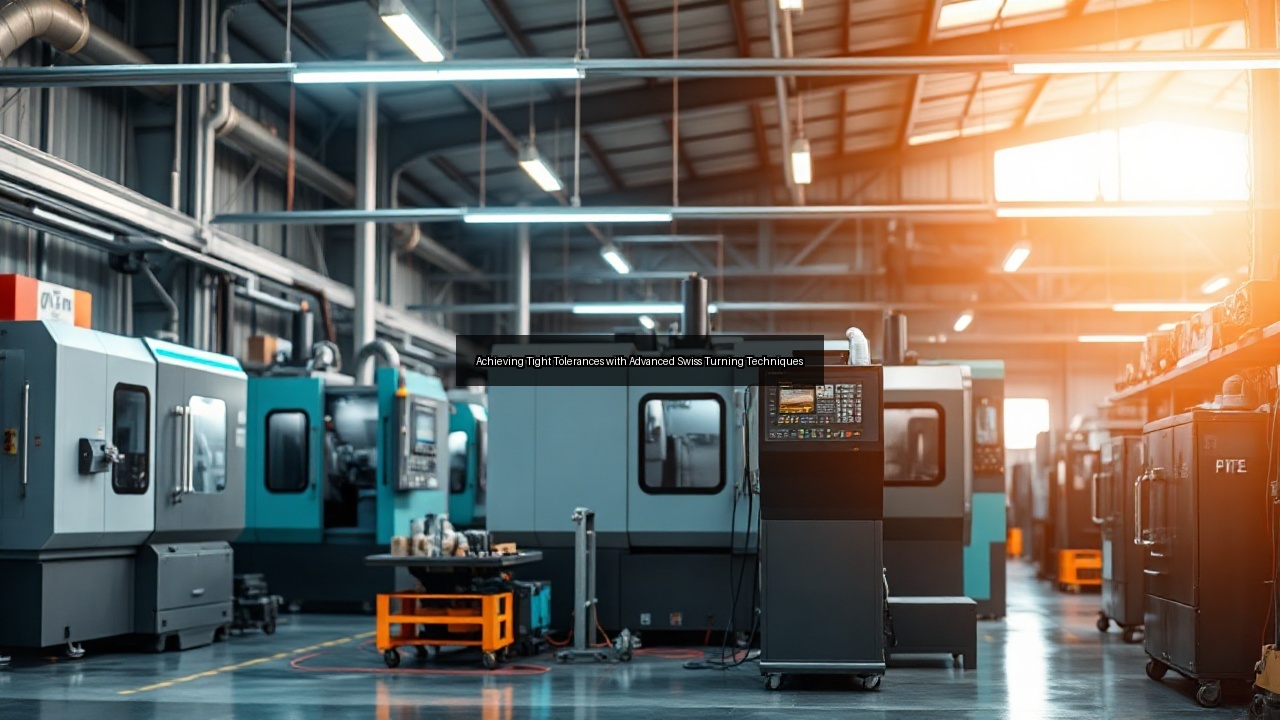
Introduction to Swiss Turning Techniques
Overview of Swiss Turning Services
Swiss turning, also known as Swiss machining, revolutionizes the manufacturing landscape by enabling the production of parts with exceptional precision. This technique employs specialized Swiss lathes that can produce complex geometries and tight tolerances in a single setup. Swiss turning services cater to a variety of industries, including aerospace, medical, automotive, and electronics, where even the slightest deviation can impact functionality. The unique design of Swiss lathes allows for parts to be machined while being held securely, which minimizes the risk of distortion and ensures a high degree of accuracy. Companies offering Swiss turning services often boast state-of-the-art equipment and skilled operators, making them invaluable partners for businesses seeking reliable manufacturing solutions.
Importance of Tight Tolerances in Manufacturing
Tight tolerances play an essential role in manufacturing, especially for components that require precise fitting with other parts. In industries like aerospace and medical devices, even minute discrepancies can lead to catastrophic failures or safety issues. Swiss turning excels in achieving tolerances as tight as ±0.001 inches, which is crucial for ensuring that parts function correctly within their intended applications. This precision also extends to surface finishes, enhancing product performance and longevity. As manufacturers strive for higher quality standards and certifications—such as ISO compliance—tight tolerances become a non-negotiable requirement. The ability to maintain these tolerances consistently sets Swiss turning apart from other machining methods, including CNC milling, which may struggle to achieve the same levels of accuracy.
Applications of Swiss Turning in Various Industries
Swiss turning finds applications across a broad spectrum of industries due to its adaptability and precision. In the medical field, components like surgical instruments and implant parts require extreme accuracy and high-quality finishes, making Swiss turning services indispensable. The aerospace industry relies on Swiss machining for producing lightweight yet sturdy components from materials such as titanium and aluminum, where tolerances must be strictly controlled. Automotive manufacturers utilize Swiss turning to create high-performance engine components, fasteners, and fittings. Even the electronics sector benefits, with the fabrication of intricate connectors and housings from materials like copper and acetal. The versatility of Swiss turning ensures that it meets the diverse needs of these industries while adhering to stringent quality standards.
Key Advantages of Swiss Turning
Precision and Accuracy in Machining
Swiss turning stands out for its unparalleled precision and accuracy in machining. The design of Swiss lathes allows for the simultaneous machining of multiple features on a part, significantly enhancing the overall accuracy. Unlike traditional lathes, Swiss machines can handle small, complex parts while maintaining tight tolerances. This capability makes Swiss turning particularly well-suited for intricate components like those used in medical devices and aerospace applications. Operators can program CNC turning services to achieve specific geometric profiles, ensuring that parts meet exact specifications. The high degree of control over various machining parameters, such as feed rates and spindle speed, further contributes to the precision of the final product. This level of accuracy reduces the need for extensive post-processing, saving time and costs while increasing overall manufacturing efficiency.
Efficiency in Production and Design
Efficiency is a hallmark of Swiss turning, driven by the ability to produce parts quickly without sacrificing quality. The automatic nature of Swiss lathes allows for continuous production runs, minimizing downtime and maximizing output. CNC machines enable operators to program complex designs that can be executed with minimal manual intervention. This automation not only speeds up production but also reduces the likelihood of human error, which is crucial in maintaining tight tolerances. Swiss turning services can accommodate rapid prototyping, allowing companies to test designs and iterate quickly. The efficiency gained through this process supports faster time-to-market for new products, giving businesses a competitive edge in their respective industries. Additionally, the ability to work with a variety of materials—such as metals like steel and aluminum, as well as plastics like PTFE and acetal—further enhances the efficiency of Swiss turning operations.
Versatility with Different Materials: Metal and Plastic
Swiss turning showcases remarkable versatility, handling a diverse range of materials, from metal to plastic. The ability to machine both hard materials like stainless steel and softer materials such as acetal makes Swiss turning services adaptable to various project requirements. This versatility allows manufacturers to select the appropriate material based on specific application needs, whether that involves durability, weight, or thermal properties. For example, copper components can be produced with high conductivity for electronic applications, while PTFE parts offer excellent chemical resistance in industrial settings. The diverse material capabilities of Swiss machining make it an attractive option for companies looking to streamline production across multiple product lines. Moreover, the precision achieved in machining these materials ensures that end products meet stringent industry standards while maintaining the desired functional characteristics.
Advanced Technologies in Swiss Turning
Role of CNC Lathes and Machines
CNC lathes play a pivotal role in modern Swiss turning operations by automating the machining process and enhancing precision. These machines utilize computer numerical control to execute intricate designs with remarkable accuracy, allowing for complex shapes that manual lathes would struggle to achieve. The integration of advanced CNC technology in Swiss turning allows for multiple machining operations—such as cnc turning threading, drilling, and milling—to occur within a single setup, which significantly reduces production time. Operators can program the machines to perform sequential tasks, optimizing workflows and minimizing part handling. This automation not only boosts productivity but also enhances the consistency and quality of the finished components. As the demand for high-quality, precision parts continues to grow, CNC lathes remain at the forefront of Swiss turning innovations.
Integration of Quality Assurance Processes
Quality assurance remains a critical aspect of Swiss turning, ensuring that every part produced meets stringent industry standards. Companies specializing in Swiss turning services implement robust quality control processes at various stages of production. This includes the use of high-precision measuring tools, automated inspection systems, and statistical process control to monitor tolerances and surface finishes. By integrating quality assurance throughout the manufacturing process, companies can quickly identify and rectify any deviations, reducing waste and improving efficiency. The aim is to deliver a product that aligns with customer specifications while adhering to relevant ISO standards. This commitment to quality helps establish a reputation for reliability and excellence within the competitive landscape of precision machining services.
Surface Finishing Techniques for Enhanced Quality
Surface finishing techniques play a vital role in enhancing the quality of parts produced through Swiss turning. Achieving a superior surface finish not only improves the aesthetic appeal of components but also impacts their performance and longevity. Various finishing methods, such as polishing, coating, and anodizing, can be applied to Swiss-turned parts, depending on the material and application. For instance, metal components may undergo anodizing to increase corrosion resistance, while plastic parts can be polished for a smoother finish. The careful selection of surface finishing techniques ensures that components meet industry standards for both appearance and functionality. As manufacturers continue to prioritize quality, advanced surface finishing becomes an integral part of the Swiss turning process, contributing to the overall value of the final product.
Case Studies and Applications
Hogge Precision Parts: Success Stories
Hogge Precision Parts exemplifies the successful application of Swiss turning techniques in high-demand manufacturing environments. Specializing in precision components, this company has leveraged Swiss turning services to produce intricate parts for various industries, including aerospace and medical devices. By focusing on tight tolerances and high-quality finishes, Hogge Precision has built a reputation for reliability and excellence. Their success stories highlight the importance of advanced machining techniques, quality assurance processes, and the ability to adapt to client-specific needs. The integration of state-of-the-art CNC lathes allows Hogge to maintain high production rates while ensuring that every part meets rigorous standards, solidifying their position as a leader in the precision machining sector.
Mccormick Industries: Innovative Swiss Turning Solutions
Mccormick Industries represents another success story in the realm of innovative Swiss turning solutions. This company has effectively harnessed the capabilities of Swiss machining to develop custom components tailored to the unique requirements of its clients. By utilizing advanced CNC technology and skilled operators, Mccormick Industries can produce parts ranging from small fasteners to complex assemblies with high precision. Their commitment to quality assurance ensures that every product meets strict tolerances, enhancing customer satisfaction and trust. The combination of engineering expertise and cutting-edge technology allows Mccormick to remain at the forefront of the industry, continually pushing the boundaries of what is achievable through Swiss turning.
Comparative Analysis: Swiss Turning vs. CNC Milling
Comparing Swiss turning to CNC milling reveals distinct advantages and disadvantages of each method. Swiss turning excels in producing small, highly precise components with tight tolerances, making it the preferred choice for applications in the medical and aerospace industries. Conversely, CNC milling offers greater flexibility for larger components and complex shapes, with a wider range of tooling options available. The choice between these two methods largely depends on the specific requirements of a project, including material type, desired tolerances, and overall complexity. While CNC milling can achieve impressive results, Swiss turning’s unique capabilities make it indispensable for manufacturers seeking precision-engineered parts. Ultimately, businesses must evaluate their needs to determine the most suitable machining technique for their applications.